
Published on March 17, 2026
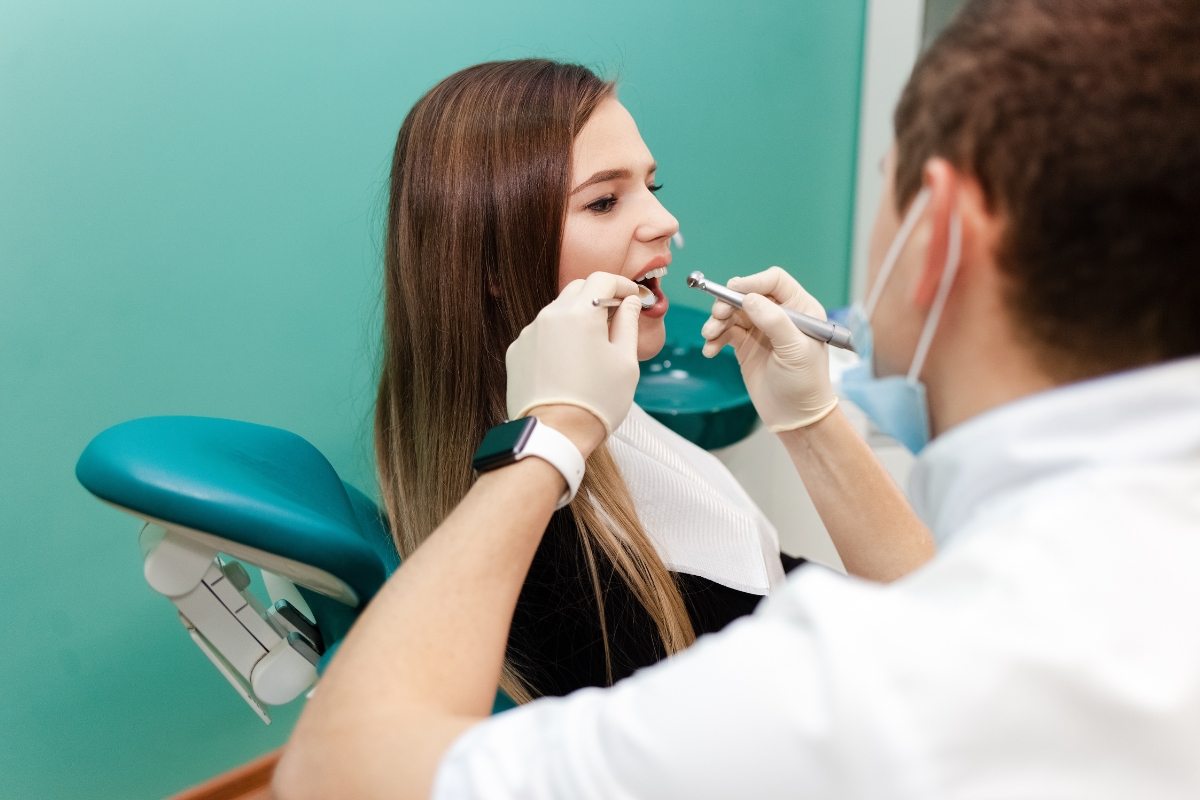
When you think about oral health, brushing and flossing probably come to mind first. But there’s an unsung hero working around the clock to protect your teeth and gums—your saliva. Yes, that simple fluid in your mouth plays a powerful role in keeping your smile healthy.
Most people don’t realize how essential saliva is until something feels off—like persistent dry mouth or bad breath. Understanding how it works can help you take better care of your oral health and know when it’s time to seek professional help from a Dentist Chester residents trust.
What Exactly Is Saliva?
Saliva is more than just water. It’s a complex fluid made up of enzymes, proteins, minerals, and antibacterial compounds. Produced by your salivary glands, it’s constantly flowing in your mouth—even when you’re not eating.
On average, your body produces about 1–2 liters of saliva every day. That’s a lot of natural protection for your teeth and gums!
Why Saliva Matters for Your Oral Health
Saliva does much more than keep your mouth moist. It plays several key roles that directly impact your dental health.
1. Helps Prevent Tooth Decay
Saliva neutralizes acids produced by bacteria after you eat. These acids can wear down enamel and lead to cavities.
How it helps:
- Washes away food particles
- Reduces acid buildup
- Strengthens enamel with minerals like calcium and phosphate
2. Protects Against Gum Disease
Healthy saliva contains antibacterial properties that help control harmful bacteria in your mouth.
Benefits include:
- Lower risk of plaque buildup
- Reduced inflammation in gums
- Support for overall gum health
3. Aids Digestion
Digestion actually begins in your mouth. Saliva contains enzymes that start breaking down food as you chew.
This means:
- Easier swallowing
- Better nutrient absorption
- Improved digestive health overall
4. Keeps Your Mouth Comfortable
Ever had a dry mouth? It’s not just uncomfortable—it can also be harmful.
Saliva helps:
- Prevent dryness and irritation
- Make speaking easier
- Enhance taste sensation
5. Speeds Up Healing
Saliva contains proteins that help repair tissues in your mouth. This is especially important after dental procedures or minor injuries.
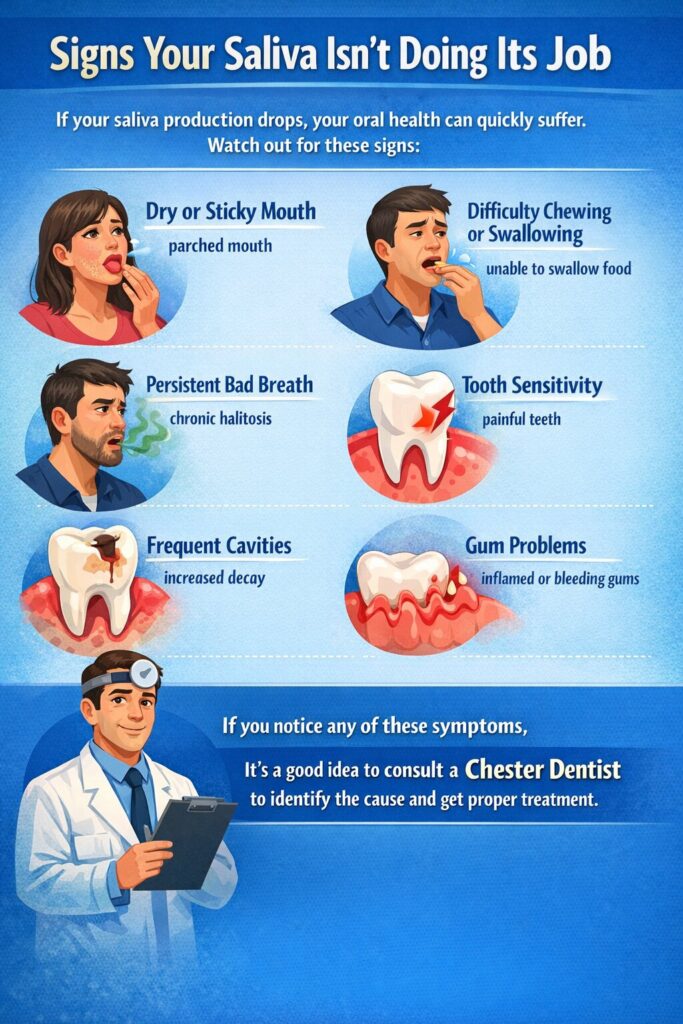
Signs Your Saliva Isn’t Doing Its Job
If your saliva production drops, your oral health can quickly suffer. Watch out for these signs:
- Constant dry or sticky feeling in the mouth
- Difficulty chewing or swallowing
- Bad breath that won’t go away
- Increased tooth sensitivity
- Frequent cavities or gum issues
If you notice any of these symptoms, it’s a good idea to consult a Chester Dentist to identify the cause and get proper treatment.
Common Causes of Dry Mouth
Dry mouth (xerostomia) can happen for several reasons, including:
- Dehydration
- Certain medications (like antihistamines or blood pressure drugs)
- Smoking or tobacco use
- Medical conditions such as diabetes
- Aging
In Chester and surrounding areas, seasonal changes—especially dry winter air—can also contribute to reduced saliva production.
Simple Ways to Boost Saliva Naturally
The good news? There are easy, everyday steps you can take to support healthy saliva flow.
Stay Hydrated
Drink plenty of water throughout the day. This is the simplest and most effective way to keep saliva flowing.
Chew Sugar-Free Gum
Chewing stimulates saliva production. Look for gum with xylitol for added dental benefits.
Eat Crunchy Fruits and Vegetables
Foods like apples, carrots, and celery naturally encourage saliva flow.
Limit Caffeine and Alcohol
Both can dry out your mouth if consumed in excess.
Maintain Good Oral Hygiene
Brush twice daily and floss regularly to keep your mouth healthy and support saliva function.
Local Tips for Better Oral Health in Chester
Living in Chester, VA, comes with its own lifestyle habits that can influence oral health.
- Busy schedules often mean grabbing quick meals—try to rinse your mouth or drink water after eating on the go.
- Local dining favorites may include sugary or acidic foods—balance them with proper oral care.
- Outdoor activities in warmer months can lead to dehydration—carry a water bottle to stay hydrated.
Regular dental visits in the Chester area can also help monitor saliva-related issues early.
Source: CNN
When Should You See a Dentist?
You shouldn’t ignore persistent dry mouth or oral discomfort. Professional care can help identify underlying issues and prevent complications.
Visit a dentist if you experience:
- Ongoing dry mouth
- Frequent cavities
- Gum bleeding or swelling
- Difficulty eating or speaking
Early care makes a big difference in maintaining long-term oral health.
Common Questions About Saliva and Oral Health
Can drinking more water really help with saliva production?
Yes, staying hydrated is one of the most effective ways to maintain healthy saliva levels.
Is dry mouth a serious problem?
It can be. Left untreated, it increases the risk of cavities, gum disease, and infections.
Are there treatments for low saliva?
Yes, depending on the cause. Your dentist may recommend special rinses, medications, or lifestyle changes.
Does saliva help with bad breath?
Absolutely. Saliva helps wash away bacteria that cause odor.
Final Thoughts: Protect Your Smile Naturally
Saliva is one of your body’s most powerful natural defenses. It protects your teeth, supports your gums, and keeps your mouth functioning comfortably every day.
Taking simple steps like staying hydrated, eating well, and maintaining good oral hygiene can go a long way in supporting this essential function.
If you’re experiencing any signs of dry mouth or want to ensure your oral health is on the right track, the team at Best Smiles Chester is here to help. From preventive care to personalized treatments, they’re dedicated to keeping your smile healthy and strong.
Book your appointment today and take the next step toward better oral health.
