
Published on February 15, 2026

It always seems to happen at the worst possible time.
You brush, get into bed, and finally relax… then a sharp, throbbing pain hits your tooth. Within minutes, you’re sitting upright, holding your jaw, wondering why now? Nighttime toothaches are incredibly common, and they feel worse after dark for a reason — when you lie down, blood pressure in the head increases slightly, which intensifies pain and inflammation.
The good news: a sudden toothache at night is your body’s early warning system. It usually means something is treatable before it becomes a serious dental emergency.
If the pain feels intense, persistent, or keeps you awake, you may need to contact an Emergency Dentist South Richmond as soon as the office opens the next morning — but there are important things you should (and should not) do right away.
Why Tooth Pain Feels Worse at Night
Nighttime toothaches don’t start at night — you just finally notice them.
During the day you’re talking, eating, working, and distracted. At night your body quiets down and inflammation becomes more noticeable. Also:
- Lying flat increases pressure in the jaw
- There’s less saliva while sleeping
- Teeth grinding often happens overnight
- Trapped food particles irritate nerves
A tooth rarely hurts “for no reason.” Usually, one of these is happening:
Common Causes
- A deep cavity touching the nerve
- A cracked tooth
- A lost filling or crown
- Gum infection
- Impacted wisdom tooth
- Teeth grinding (bruxism)
- Dental abscess
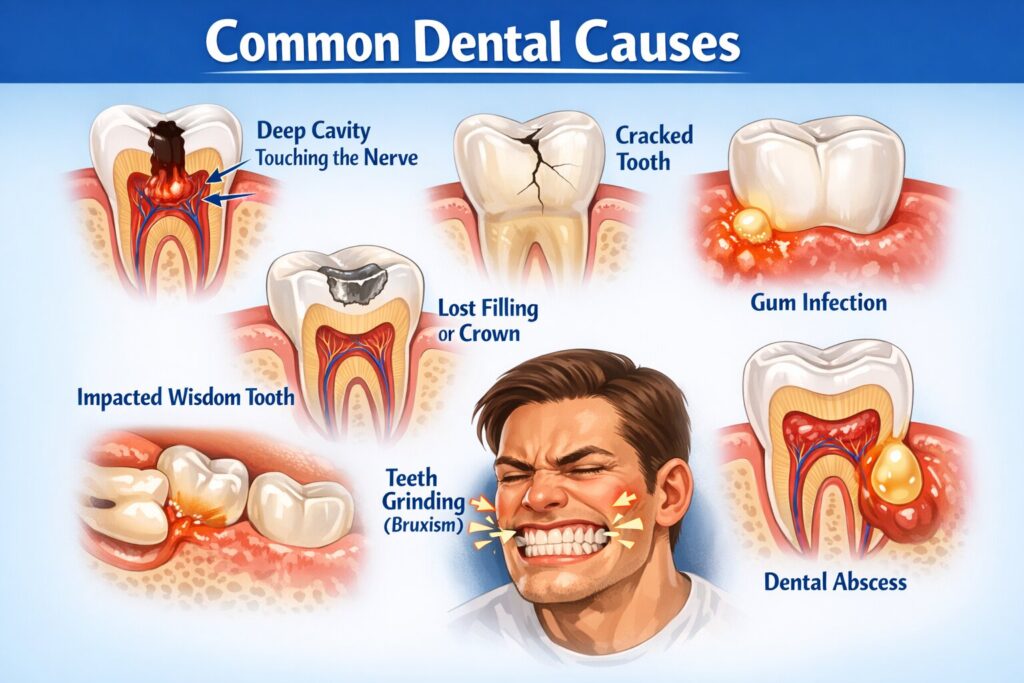
If the pain is throbbing, pulsing, or radiating to the ear — that often indicates nerve involvement or infection.
What You Should Do Immediately (At Home Relief)
You don’t need to panic. The goal tonight is control pain and prevent swelling until you can see a dentist.
1. Rinse With Warm Salt Water
This is the most underrated first aid step.
How:
- 1/2 teaspoon salt
- 1 cup warm water
- Swish for 30 seconds
- Spit (don’t swallow)
It reduces bacteria and calms irritated tissue.
2. Check for Trapped Food
Surprisingly, a lot of nighttime toothaches are caused by food stuck between teeth.
Use:
- Dental floss (gentle)
- Interdental pick
Do not dig into gums with sharp objects.
3. Take the Right Pain Relief
Over-the-counter medications help inflammation, not just pain.
Usually helpful:
- Ibuprofen (Advil, Motrin)
- Acetaminophen (Tylenol)
Avoid placing aspirin directly on the tooth — this is an old myth and can burn your gums.
4. Sleep With Your Head Elevated
Use 2 pillows or a recliner.
This alone can significantly reduce throbbing.
5. Use a Cold Compress
Apply to the outside of your cheek:
- 15 minutes on
- 15 minutes off
It limits swelling and numbs nerves.
What NOT to Do
Many people accidentally make the situation worse.
Avoid:
- Very hot drinks
- Ice directly on the tooth
- Chewing on the painful side
- Alcohol for “numbing”
- Clove oil directly on exposed nerve (can burn tissue)
If swelling appears on your face or jaw, it may indicate an infection — you should seek urgent care from an Emergency Dentist in South Richmond first thing in the morning.
Signs You Should Seek Care Quickly
Call a dentist promptly if you notice:
- Swelling in face or gums
- Fever
- Bad taste in mouth
- Pus or discharge
- Pain lasting more than 24–48 hours
- Pain when biting
- Tooth sensitivity to pressure
- Ear or jaw pain spreading
These often mean the nerve is infected and the tooth may require treatment such as a root canal or restoration. Waiting can allow the infection to spread into bone or soft tissue.
Why Morning Treatment Matters
Dental infections don’t stay small.
A tooth nerve infection is similar to a splinter under the skin — your body cannot heal it alone because bacteria are trapped inside the tooth. Antibiotics alone are usually not a permanent fix.
A dentist will:
- Take digital X-rays
- Identify the source
- Relieve pressure
- Stop the infection
- Save the tooth whenever possible
Early treatment is faster, less painful, and less expensive than waiting.
Local Tips for South Richmond Residents
People in South Richmond often delay care because the pain “comes and goes.” Unfortunately, that’s actually a warning sign — nerves sometimes stop hurting when they die, and infection spreads quietly.
Situations that commonly trigger nighttime pain locally:
- Late dinners or sugary drinks before bed
- Teeth grinding from work stress
- Cracked teeth from ice chewing
- Sports injuries from local recreation leagues
- Older fillings finally breaking down
If your pain started after biting hard food (nuts, ice, popcorn kernels), a cracked tooth is very likely.
How Dentists Treat Nighttime Toothaches
Your treatment depends on the cause:
| Problem | Typical Treatment |
|---|---|
| Deep cavity | Tooth-colored filling |
| Nerve infection | Root canal therapy |
| Cracked tooth | Crown |
| Abscess | Drainage + treatment |
| Gum infection | Periodontal cleaning |
| Impacted tooth | Extraction |
Source: Teeth Talk Girl
Most patients are surprised: treatment relieves pain almost immediately because the pressure inside the tooth is removed.
Helpful Questions Patients Ask
Why does the pain throb instead of stay constant?
Inflamed nerves react to blood flow. When circulation increases while lying down, pressure inside the tooth rises, creating pulsing pain.
Why does cold water sometimes help?
Cold temporarily shrinks inflamed tissue and reduces nerve signaling — but it doesn’t fix the cause.
Can a toothache go away on its own?
Pain may disappear, but the infection does not. Often the nerve dies and the infection spreads silently.
Is this considered urgent?
Yes. Persistent tooth pain is one of the most common reasons people require same-day dental care.
What if the pain stops before my appointment?
Still go. The problem is still present — just less noticeable.
Prevent Future Nighttime Toothaches
Small habits make a big difference:
- Brush for 2 minutes before bed
- Floss nightly
- Avoid late-night sugar
- Wear a night guard if you grind
- Replace old fillings before they break
- Keep regular dental exams
Most severe toothaches start as a small cavity months earlier.
Conclusion & Next Steps
A nighttime toothache is not just bad luck — it’s your body asking for help early, while the tooth is still very treatable. Temporary relief at home is helpful, but real relief comes from identifying and correcting the cause.
If you woke up from dental pain, don’t wait for another sleepless night.
Contact Best Smiles South Richmond in South Richmond and Book your appointment today. Early care is faster, more comfortable, and often saves the tooth completely.
